Artivorin Official Website › Blog › Reading A Label With No Amounts
How To Read A Supplement Label That Does Not Print Amounts
A surprising number of products sold on long web pages show four or five ingredient names in decorative boxes and no figures anywhere. Here is what you can still establish, what you cannot, and the six questions that settle most of it in one telephone call.
- A Supplement Facts panel carries six lines, and each one lets you do something you cannot do without it.
- A named ingredient list without amounts still tells you three useful things: the list itself, the order, and what the company chose to lead with.
- It cannot tell you whether any ingredient is present at a researched amount, and nothing else can either.
- Six questions on the telephone settle most of it, and how they are answered is itself information.
- Never accept an estimate from a third-party site. A plausible invented figure gets copied and becomes a fact about the bottle.
What a panel is supposed to carry
The Supplement Facts panel exists so that a buyer can do arithmetic. It is a modest document and each of its lines has a job.
| What a Supplement Facts panel normally carries | What it lets you do |
|---|---|
| Serving size, and servings per container | Work out the daily amount and how long a bottle lasts. Everything else depends on this line. |
| Each active, with its amount per serving | Compare the product with the research behind each ingredient. |
| Percentage daily value, where one exists | See at a glance whether a vitamin or mineral is at a nutritional or a pharmacological amount. |
| A proprietary blend total, where one is used | Establish a ceiling, and nothing more. The first ingredient could be almost all of it. |
| The other-ingredients line | Find the capsule shell, the flow agents and any allergen that is not an active. |
| The plant part, and the standardisation | Decide whether the research on that plant actually applies to what is in the bottle. |
Six lines. A label carrying all six can be checked against the literature in about two minutes. A label carrying none of them cannot be checked at all.
Notice how much of that table is about enabling a comparison rather than making a claim. A panel does not tell you that a product works. It tells you what is in it, in what quantity, so that you can find out what has been measured about that quantity.
The NIH Office of Dietary Supplements sets out what a buyer is entitled to expect from a label, and NCCIH’s guidance on using supplements wisely covers the same ground for somebody choosing between products. Both are worth ten minutes before spending anything in this category.
What you can still establish without one
A label with names but no numbers is not useless. Three things survive.
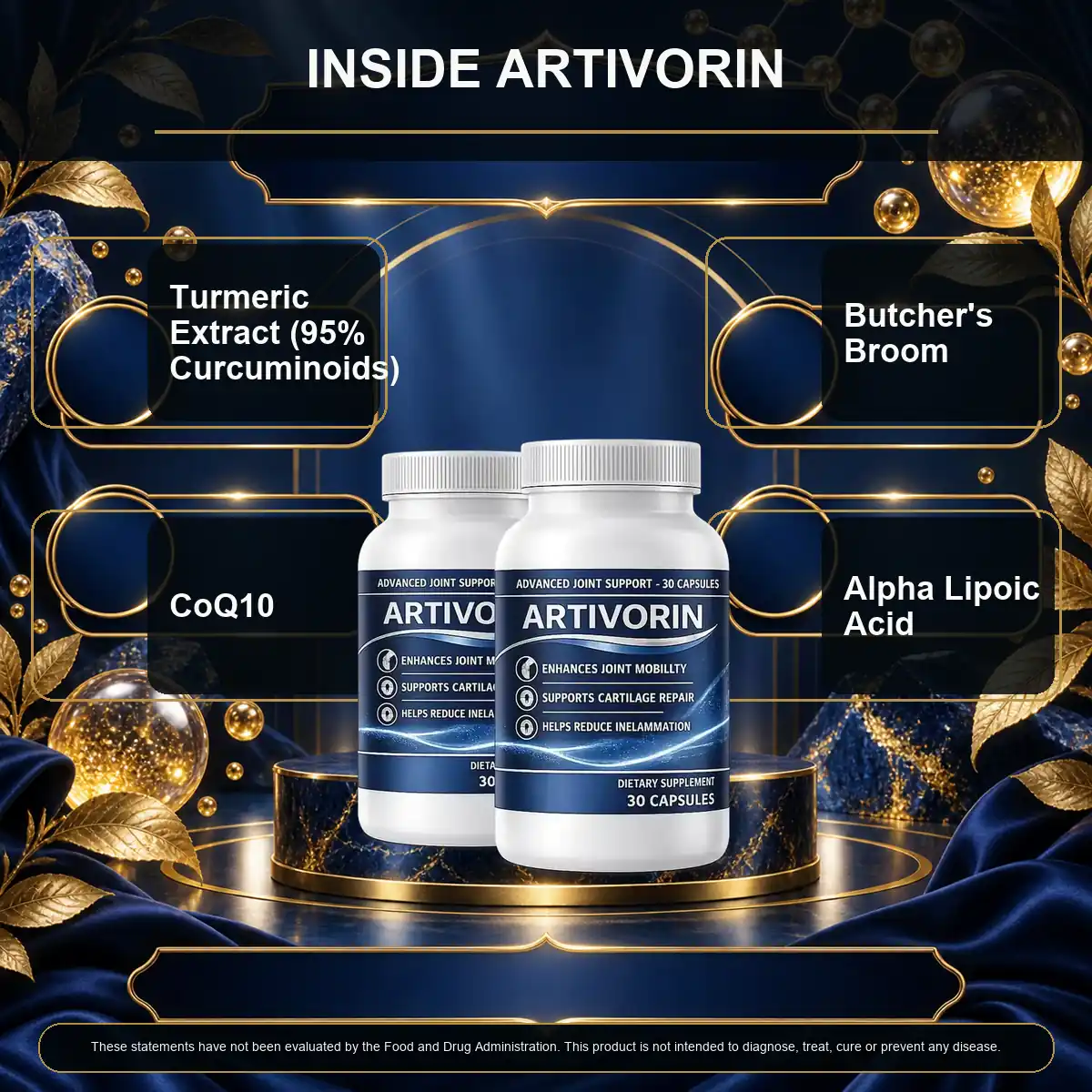
- The list itself. Knowing that a product contains turmeric, CoQ10, a vein herb and a fatty acid tells you which fields of medicine the formula is borrowing from, and that is most of what decides whether it is plausible.
- The order. Ingredient lists are conventionally ordered by prominence, and a company that leads with its best-evidenced ingredient is telling you something about how it thinks about the formula.
- Consistency across sources. If the pack sheet, the website graphic and a sister site all give the same four names in the same order, the list is settled rather than decorative. That is a genuine finding and it is more than some products manage.
You can also establish quite a lot about the company. A seller that publishes a research grade such as 95 per cent curcuminoids has bought a specific material and wants you to know. A seller that names a plant part has thought about which part. A seller that publishes neither has either not thought about it or has decided not to say.
And you can establish what the research amounts are, independently, which is the half of the comparison that does not depend on the seller at all. The curcuminoid knee trials used 1,500 mg a day. The alpha-lipoic acid trials used 600 mg. The pooled ruscus trials used 150 mg of root extract per capsule. Those numbers are public and they do not move.
What genuinely cannot be established
One thing, and it is the thing that decides everything: whether any ingredient in the capsule is present at an amount that has ever been shown to do anything.
It is worth being precise about how complete that gap is. It is not that the amount is probably low. It is that the amount is unknown, and it could be anything from a research dose to a dusting. Capsule volume puts a physical ceiling on it, which is the only constraint available, and a ceiling is not a figure.
That matters most for exactly the ingredient a buyer cares about. On a turmeric-led formula, the curcumin evidence is the reason to buy, the 1,500 mg figure is the reason it is credible, and the unprinted weight is the reason the two cannot be connected.
An estimate. Where a site prints a plausible-looking milligram figure for a product whose label carries none, that figure was invented, and within a month it will be quoted back as a fact about the bottle. A blank is more honest and considerably more useful.
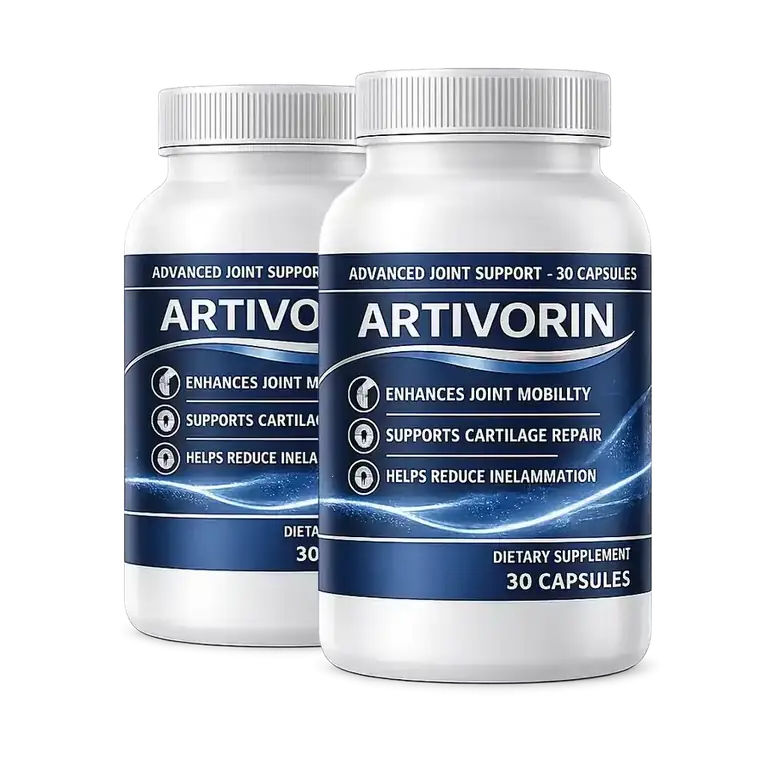
This label names four ingredients and prints no amounts
Artivorin’s artwork carries four names in four boxes, on both of the product’s websites, with no figure beside any of them. This desk says so on every page and estimates nothing. 60 days from the transaction in which to send it back.
Two bottles $178 · six bottles $294 · 60-day money-back guarantee
Order Artivorin On The Official WebsiteLot ART-26/MY-2615 · one a day · 30 in every bottle
The six questions that settle most of it
| The question to ask a seller | Why it matters | What a good answer sounds like |
|---|---|---|
| How many milligrams of each active are in a serving? | It is the whole comparison. Everything else is preliminary. | A number per ingredient, or an honest statement that the company does not disclose it. |
| What plant part is each botanical? | Root, leaf, bark and seed are separate ingredients with separate evidence. | A part per botanical, without hesitation. |
| Is anything standardised, and to what marker? | It separates an extract from a powder and tells you the grade. | A percentage and a named marker compound. |
| What is the capsule shell made of? | Gelatin and vegetable cellulose are both ordinary. Which one matters to some people. | One word. |
| Is there an other-ingredients line, and what is on it? | Allergens, flow agents and fillers live there. | A short list, or a clear no. |
| Can I see a certificate of analysis for the batch? | It is the document that would confirm identity and assay. | Either a document, or a straight no. Both are more useful than a deflection. |
Six questions, about three minutes on the telephone, and they work on any supplement company in any category.
Three practical notes on using that list. Telephone rather than email, because a hesitation is informative and an email is drafted. Ask before buying rather than after, because an opened bottle is harder to return than an unanswered question. And write down what you are told, with the date, because the next person you speak to may say something different.
How a company answers is itself the finding. A straight number, a straight no and a straight I will find out are all acceptable. A long explanation of why the question does not matter is the answer to a different question.
Three traps on labels that do print numbers
- The percentage divisor. Lycopene 5 per cent at 10 mg is half a milligram of lycopene, not ten. A percentage in front of a weight is a multiplier, and labels rely on nobody multiplying.
- The proprietary blend. One total covering six ingredients establishes a ceiling and nothing else. The first-named ingredient could account for almost all of it, and the last could be a pinch.
- The extract ratio. A 10:1 extract of a plant is not ten times better than a 1:1; it is a different material entirely, and unless a marker compound is named, the ratio does not tell you what is in it.
A fourth, half-trap, is worth mentioning: the absorption question. The 1998 pharmacokinetic study found human serum curcumin undetectable or very low after 2 g taken alone, and sharply higher with 20 mg of piperine alongside. For that ingredient, whether an enhancer is present changes the answer more than a few hundred milligrams either way.
So a label printing a weight without naming an enhancer has given you one number and left out the variable that decides what the number means.
How to decide when the answer never comes
Sometimes you ask the six questions and get nothing useful. What then?
The honest answer is that it depends what kind of buyer you are, and both kinds are reasonable. Somebody who chooses supplements by reading panels should buy a different product, and there is no argument to be had about it: the information they use to decide does not exist here.
Somebody who is buying a convenience — one capsule, a named retailer, a return window, somebody to call — is buying something real, and the unprinted amounts are part of the price of that. The mistake is not making that trade. The mistake is making it without noticing.
Either way, two rules survive. Buy where you can send it back, because an unverifiable product with a sixty-day window is a much better bet than an unverifiable product with none. And write the three numbers down before the first capsule, because with no label to reason from, your own record is the only evidence you will ever have.
References
- Using Dietary Supplements Wisely. National Center for Complementary and Integrative Health, National Institutes of Health. https://www.nccih.nih.gov/health/using-dietary-supplements-wisely
- Dietary Supplements: What You Need to Know. Office of Dietary Supplements, National Institutes of Health. https://ods.od.nih.gov/factsheets/WYNTK-Consumer/
- Panahi Y, Rahimnia AR, Sharafi M, et al. Curcuminoid treatment for knee osteoarthritis: a randomized double-blind placebo-controlled trial. Phytother Res. 2014;28(11):1625-31. PMID 24853120. Dose: 1,500 mg/day of curcuminoids in three divided doses for 6 weeks. https://pubmed.ncbi.nlm.nih.gov/24853120/
- Shoba G, Joy D, Joseph T, et al. Influence of piperine on the pharmacokinetics of curcumin in animals and human volunteers. Planta Med. 1998;64(4):353-6. PMID 9619120. After 2 g of curcumin alone, human serum levels were undetectable or very low; 20 mg of piperine alongside it raised them sharply. https://pubmed.ncbi.nlm.nih.gov/9619120/
- Ziegler D, Ametov A, Barinov A, et al. Oral treatment with alpha-lipoic acid improves symptomatic diabetic polyneuropathy: the SYDNEY 2 trial. Diabetes Care. 2006;29(11):2365-70. PMID 17065669. Doses: 600, 1,200 and 1,800 mg once daily for 5 weeks; the authors concluded 600 mg gave the best risk-to-benefit ratio. https://pubmed.ncbi.nlm.nih.gov/17065669/
- Boyle P, Diehm C, Robertson C. Meta-analysis of clinical trials of Cyclo 3 Fort in the treatment of chronic venous insufficiency. Int Angiol. 2003;22(3):250-62. PMID 14612852. Dose: capsules of 150 mg Ruscus aculeatus root extract with 150 mg hesperidin methyl chalcone and 100 mg ascorbic acid. https://pubmed.ncbi.nlm.nih.gov/14612852/