Artivorin Official Website › Side effects
Side effectsArtivorin Side Effects and Drug Interactions
The side effects linked to Artivorin’s ingredients are mostly digestive, and they often settle when the capsule is taken with a meal.
Four interactions have named research: turmeric with anticoagulants and with the liver, alpha-lipoic acid with blood sugar, and CoQ10 with warfarin. If any of these apply to you, ask your doctor first.
To check if it fits you, see who Artivorin is for.
What is ordinary, what is worth a conversation before ordering, and what is a reason to stop on the day.
The everyday Artivorin side effects, and how often they happen
Six ordinary complaints, which ingredient each belongs to, and what settles it.
Start with the ordinary end, because it is where almost everything actually happens. None of these four ingredients is a stimulant, a hormone or a sedative, and the reported complaints in supplement use of all four are overwhelmingly digestive.
| What people report | Which ingredient it usually belongs to | What usually fixes it |
|---|---|---|
| Mild stomach discomfort or nausea in the first week | Turmeric extract, and to a lesser degree alpha-lipoic acid. | Taking the capsule in the middle of a meal rather than before one. If a week of that has not settled it, stop. |
| Loose stools | Turmeric extract, which stimulates bile flow. | Same fix. It is dose-related in the published trials and it tends to fade. |
| A faintly sulphurous or metallic taste | Alpha-lipoic acid, which smells of sulphur in bulk. | Swallow the capsule whole with plenty of water. Do not open it. |
| Reflux or a burning sensation | Turmeric extract, in people who already get reflux. | Move the capsule to the largest meal of the day, and stay upright for a while afterwards. |
| A skin rash or itching | Any of the four, as an idiosyncratic response. | Stop. This one is not worth working around, and a refund is available for the rest of the bottle. |
| Yellow staining on fingers or teeth | Turmeric, if a capsule is opened or bitten. | Swallow it whole. Curcuminoid staining on fabric is close to permanent. |
Assembled from the reported adverse events in the trials cited on this site and from the standing NIH references below. The distributor publishes no adverse event summary of its own.
Two things are worth saying about that table. The first is that it is short, and genuinely so: the trials behind these ingredients ran for six weeks, twelve weeks and in one case four years, and tolerability was consistently unremarkable at doses well above anything a four-ingredient capsule is likely to carry.
The second is that the seller publishes no adverse event data for this specific capsule. Nobody does for most supplements. What this desk can offer instead is the safety record of each ingredient in its own research, which is what the rest of this page is.
The four Artivorin interactions worth naming
Four interactions with a name, a source and a specific action, rather than a general instruction repeated five times.
A named interaction can be acted on. A general instruction to check with somebody cannot, which is why this page names four and then stops rather than repeating a caution in every paragraph.
Turmeric with anticoagulant and antiplatelet medicines
The most cited interaction on this label and the best documented. A dedicated interaction study examined a bioavailable curcumin formulation taken alongside antiplatelet agents, anticoagulants and thyroid replacement therapy in people already on them. The mechanism proposed is an effect on platelet aggregation, which is the same reason surgeons ask about fish oil.
What to do is specific. If you take warfarin, a direct oral anticoagulant, clopidogrel, or daily aspirin for a heart reason, tell the prescriber who manages it before you start, and tell them again if your dose of that medicine is being adjusted. If you are booked for an operation, stop two weeks beforehand.
Turmeric and the liver
Uncommon, real, and better stated once than hinted at repeatedly. The Drug-Induced Liver Injury Network published ten cases of liver injury associated with turmeric products, all of them enrolled since 2011 and six since 2017. Five people were admitted to hospital and one died of acute liver failure. Ten cases is a very small number against the scale of turmeric use worldwide, and it is not zero.
The practical version: anyone with existing liver disease, or taking a medicine known to be hard on the liver, should raise it before starting. Anyone who develops persistent nausea, unusual tiredness, dark urine or yellowing of the eyes while taking any turmeric product should stop and be seen. NCCIH’s turmeric page is the plain-English reference.
Alpha-lipoic acid and blood sugar
The most specific caution on this label, and the one least likely to be expected. Alpha-lipoic acid lowers blood glucose, which is the whole point of its diabetic research, and it can also trigger insulin autoimmune syndrome in people carrying certain tissue types. A 2026 review sets out the mechanism, the diagnosis and the management, and a 2026 case report describes hypoglycaemia in a patient who was not diabetic at all.
So this applies more widely than it first appears. Anyone taking insulin or a sulfonylurea should treat it as a conversation before starting and should watch for low blood sugar in the first fortnight. Anyone with a history of unexplained hypoglycaemia should mention it too.
CoQ10 and warfarin
Widely repeated, thinly evidenced, and worth stating in both directions because an exaggerated warning is its own kind of misinformation. Coenzyme Q10 is structurally similar to vitamin K, which is the theoretical basis for the concern. A randomised placebo-crossover trial in stable long-term warfarin outpatients looked at exactly this question.
The sensible response is to tell whoever monitors your anticoagulation what you have started, so that any change in your readings has an explanation attached. NCCIH’s coenzyme Q10 page covers the general position.
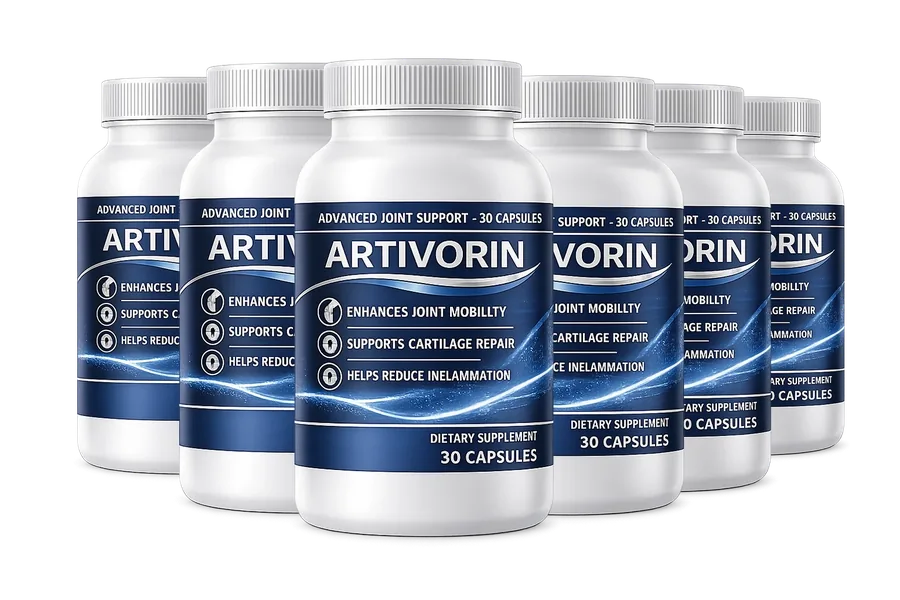
Nothing. No caution text appears in the label artwork — no interaction note, no pregnancy statement, no age line, and no instruction to speak to anybody. The four interactions above were assembled from the published literature on the four named ingredients, not reproduced from the packaging, and this desk would rather say that plainly than let a reader assume the bottle carried them.
Who should not take Artivorin at all
Five clear exclusions. Everything else on this page is a conversation, not a prohibition.
- Anyone under 18. None of these four ingredients has been trialled in children, and joint pain in a young person is a different question with a different answer.
- Anyone pregnant or breastfeeding. Turmeric extract at supplement concentrations has not been established as safe in pregnancy and none of the four has been tested in nursing mothers.
- Anyone with gallstones or a blocked bile duct. Turmeric stimulates bile flow, which is unwelcome when the duct is obstructed.
- Anyone who has had a reaction to turmeric, curcumin or alpha-lipoic acid before. A repeat exposure is not a test worth running.
- Anyone due for surgery within a fortnight, until the surgical team has been told what is being taken.
Everything else on this page is a conversation rather than a prohibition. The distinction matters because a page that treats every caution as a ban is quickly ignored, and the five above are the ones worth not ignoring.
A fuller set of situations, including the ones where the answer is qualified rather than flat, is on the who it is for page, which sets out eight of them with an action against each.
What happens if you take too much Artivorin
No upper limit is printed, so here is what the research has actually used and for how long.
Nobody publishes an upper limit for this product, because nobody publishes a lower one either. What can be said is what the research has done with each ingredient at amounts far above anything a single capsule holds.
| Ingredient | Highest amount used in the trials cited here | For how long |
|---|---|---|
| Turmeric extract | 2 g a day of Curcuma domestica extract in the pilot against ibuprofen | Six weeks, with tolerability comparable to the comparator drug. |
| Curcuminoids specifically | 1,500 mg a day in three divided doses | Six weeks in the randomised knee trial, four weeks in the 367-patient comparison. |
| Coenzyme Q10 | 300 to 400 mg a day in the dose-response analysis | Weeks to months across the pooled trials. |
| Alpha-lipoic acid | 1,800 mg a day in SYDNEY 2, with 600 mg judged the best balance | Five weeks at the high doses; 600 mg for four years in NATHAN 1. |
| Butcher’s broom | 150 mg of root extract per capsule in the pooled trials | Up to twelve weeks. |
These are research doses of single ingredients, not a permission to take extra capsules. They are here to show the margin between a capsule and the amounts these compounds have been given at deliberately.
The practical answer to the question in the heading is therefore reassuring and should not be over-read. A doubled capsule taken by mistake is very unlikely to produce anything worse than the digestive complaints at the top of this page. A routine of two or three a day, for months, is a dose nobody has calculated, including the person taking it, and there is no benefit to set against it.
Do not take more than the label states. That is the ordinary instruction and it carries more weight here than usual, because without a printed amount there is no arithmetic available to anyone who wants to reason about it.
How to report a reaction to Artivorin
Six steps in order, two of which are for the first hour and four for afterwards.
Stop taking it
First and without waiting for advice. Nothing in this formula requires tapering and nothing rebounds when it stops.
Get urgent help for anything involving breathing, the face or the throat
Swelling of the lips, tongue or throat, difficulty breathing, or a widespread rash with faintness is an emergency rather than a customer service matter. That is true of any supplement, food or medicine.
Write down what happened, with dates
When the first capsule was taken, when the symptom started, what else you take, and the lot number from the bottle. Five lines written the same day are worth more than a recollection a fortnight later.
Tell whoever prescribes your other medicines
Particularly if you take an anticoagulant, insulin or a thyroid medicine. They need it in your record whether or not it turns out to be connected.
Tell this desk, and claim the refund
Call +1 (323) 347-4522 with the order ID. A reaction inside the 60-day window is a refund like any other, and the bottle does not have to be unopened. This desk also wants the report itself: it is the only way a pattern across buyers would ever become visible.
Report it to the FDA’s MedWatch programme
Adverse events involving dietary supplements can be reported directly to the Food and Drug Administration by the person affected. It takes a few minutes and it is the mechanism by which supplement problems are eventually detected at all.
It is written down against the lot number, and the page you are reading is updated if a pattern appears. This desk sells the product and does not manufacture it, so it cannot investigate a capsule in a laboratory. What it can do is count, and say so.
Artivorin safety questions
Does Artivorin have side effects?
The reported complaints in supplement use of these four ingredients are mostly digestive: mild stomach discomfort, loose stools or reflux in the first week, usually settled by taking the capsule with a meal.
Can I take it with blood thinners?
Tell the prescriber who manages the anticoagulation before you start. Curcumin has a dedicated interaction study behind it and CoQ10 has been tested in stable warfarin patients.
Is it safe for diabetics?
Raise it before starting. Alpha-lipoic acid lowers blood glucose and has a documented link to insulin autoimmune syndrome, which matters most to anyone on insulin or a sulfonylurea.
Can it affect the liver?
A published case series links turmeric products to liver injury in ten people, which is a small number against enormous use. Anyone with existing liver disease should raise it before starting.
Should I stop it before surgery?
Yes, two weeks beforehand, and tell the surgical team what you have been taking. That is the standard precaution for any supplement studied alongside anticoagulants.
Does the bottle carry any warnings?
No caution text appears in the label artwork at all. Everything on this page was assembled from the published research on the four named ingredients rather than reproduced from the packaging.
What if I get a rash?
Stop taking it and do not restart to test the theory. Call +1 (323) 347-4522 to arrange the refund, and see somebody if the rash is spreading or comes with any swelling.
Can I take it with my other supplements?
Usually, with one caution: do not stack it with another turmeric or alpha-lipoic acid product. Two unprinted amounts together is a dose nobody can work out.
Sources for the Artivorin safety page
Every interaction paper and case series named above, plus the two standing NIH references on supplement use.
- Hu S, Belcaro G, Dugall M, et al. Interaction study between antiplatelet agents, anticoagulants, thyroid replacement therapy and a bioavailable formulation of curcumin (Meriva). Eur Rev Med Pharmacol Sci. 2018;22(15):5042-5046. PMID 30070343. https://pubmed.ncbi.nlm.nih.gov/30070343/
- Halegoua-DeMarzio D, Navarro V, Ahmad J, et al. Liver injury associated with turmeric - a growing problem: ten cases from the Drug-Induced Liver Injury Network [DILIN]. Am J Med. 2023;136(2):200-206. PMID 36252717. https://pubmed.ncbi.nlm.nih.gov/36252717/
- Kuptniratsaikul V, Thanakhumtorn S, Chinswangwatanakul P, et al. Efficacy and safety of Curcuma domestica extracts in patients with knee osteoarthritis. J Altern Complement Med. 2009;15(8):891-7. PMID 19678780. Dose: 2 g/day of Curcuma domestica extract against ibuprofen 800 mg/day for 6 weeks. https://pubmed.ncbi.nlm.nih.gov/19678780/
- Turmeric. National Center for Complementary and Integrative Health, National Institutes of Health. https://www.nccih.nih.gov/health/turmeric
- Hou S, Tian Z, Zhao D, et al. Efficacy and optimal dose of coenzyme Q10 supplementation on inflammation-related biomarkers: a GRADE-assessed systematic review and updated meta-analysis of randomized controlled trials. Mol Nutr Food Res. 2023;67(13):e2200800. PMID 37118903. Dose: 300-400 mg/day showed the strongest effect on inflammatory mediators. https://pubmed.ncbi.nlm.nih.gov/37118903/
- Engelsen J, Nielsen JD, Winther K. Effect of coenzyme Q10 and Ginkgo biloba on warfarin dosage in stable, long-term warfarin treated outpatients. A randomised, double blind, placebo-crossover trial. Thromb Haemost. 2002;87(6):1075-6. PMID 12083489. https://pubmed.ncbi.nlm.nih.gov/12083489/
- Coenzyme Q10. National Center for Complementary and Integrative Health, National Institutes of Health. https://www.nccih.nih.gov/health/coenzyme-q10
- Boyle P, Diehm C, Robertson C. Meta-analysis of clinical trials of Cyclo 3 Fort in the treatment of chronic venous insufficiency. Int Angiol. 2003;22(3):250-62. PMID 14612852. Dose: capsules of 150 mg Ruscus aculeatus root extract with 150 mg hesperidin methyl chalcone and 100 mg ascorbic acid. https://pubmed.ncbi.nlm.nih.gov/14612852/
- Ziegler D, Ametov A, Barinov A, et al. Oral treatment with alpha-lipoic acid improves symptomatic diabetic polyneuropathy: the SYDNEY 2 trial. Diabetes Care. 2006;29(11):2365-70. PMID 17065669. Doses: 600, 1,200 and 1,800 mg once daily for 5 weeks; the authors concluded 600 mg gave the best risk-to-benefit ratio. https://pubmed.ncbi.nlm.nih.gov/17065669/
- Vallianou NG, Kounatidis DC, Dalamaga M, et al. Alpha-lipoic acid as a trigger of insulin autoimmune syndrome: current evidence, a case-based approach, diagnostic pitfalls, and practical management. Metabol Open. 2026;31:100491. PMID 42662728. https://pubmed.ncbi.nlm.nih.gov/42662728/
- Salman M, Ashraf H, Alam A. Hypoglycaemia in a non-diabetic patient due to alpha-lipoic acid-induced insulin autoimmune syndrome with HLA-DRB1*04:03:01G. BMJ Case Rep. 2026;19(7). PMID 42493219. https://pubmed.ncbi.nlm.nih.gov/42493219/
- Using Dietary Supplements Wisely. National Center for Complementary and Integrative Health, National Institutes of Health. https://www.nccih.nih.gov/health/using-dietary-supplements-wisely
- Dietary Supplements: What You Need to Know. Office of Dietary Supplements, National Institutes of Health. https://ods.od.nih.gov/factsheets/WYNTK-Consumer/
Order Artivorin once the interaction list is clear
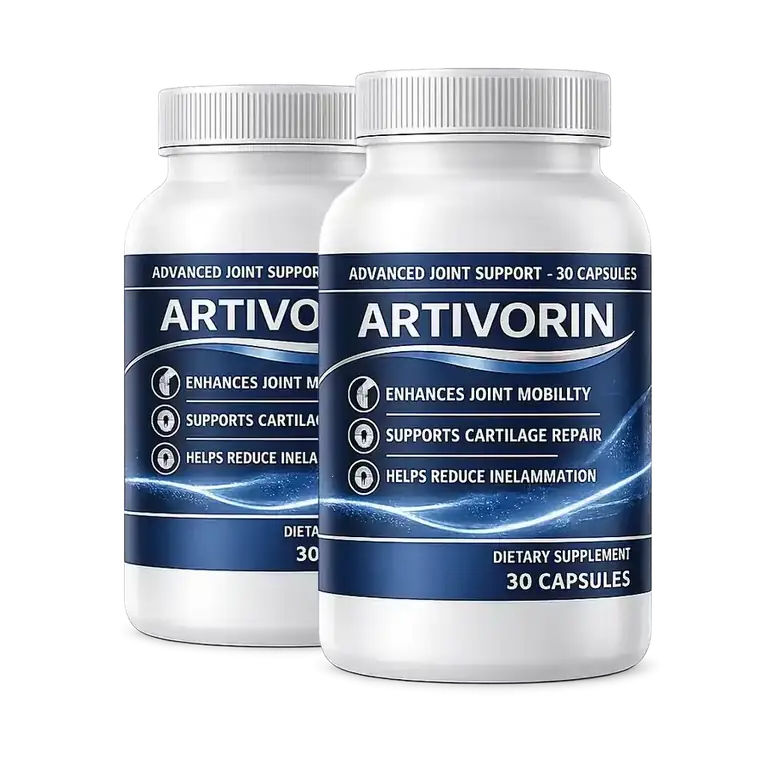
Four interactions, each with a named source and a specific action. One capsule a day, 30 to a bottle, 60 days to send it back.
Two bottles $178 · six bottles $294 · 60-day money-back guarantee
Order Artivorin On The Official WebsiteLot ART-26/MY-2615 · one a day · 30 in every bottle