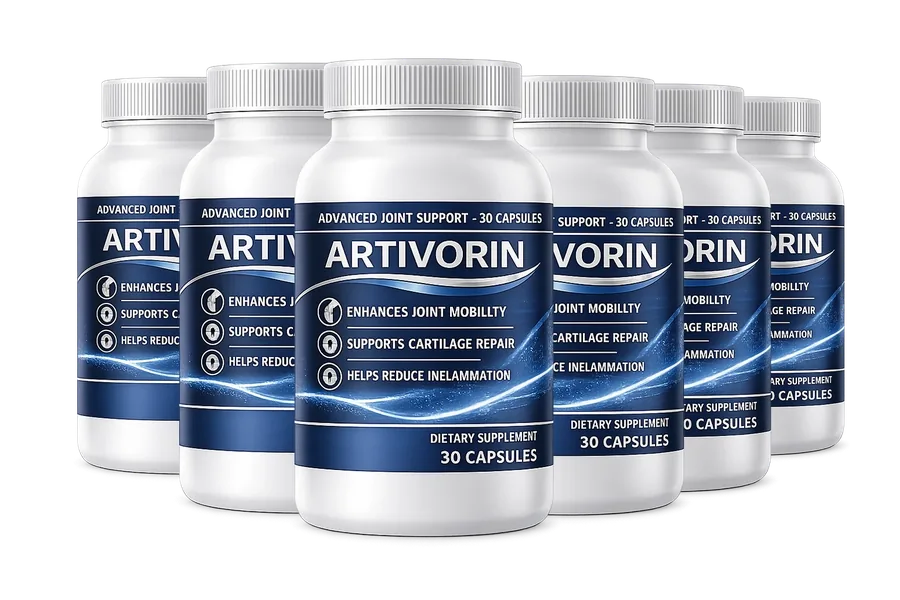
Artivorin Official Website › Joint supplement guide
Joint supplement guideThe Joint Supplement Guide
Ten ingredient families do almost all the work in this category, and two documents settle most of the argument about them.
The 2019 rheumatology guideline recommends exercise, weight loss and a short list of treatments, and names only one supplement anywhere in it. A 2025 network meta-analysis of 39 trials ranked Boswellia highest for pain and stiffness.
What the category contains, what the evidence says, and the amounts the research actually used.
What is actually in a joint supplement
Ten ingredient families, and the one distinction that decides how to read any of them.
The category is smaller than the shelf suggests. Strip the brand names away and most joint products are built from a list of about ten ingredients, combined in different proportions and photographed differently.
| Ingredient | What it is | Where its reputation comes from |
|---|---|---|
| Glucosamine sulphate | An amino sugar, usually from shellfish, sold at 1,500 mg a day. | Decades of trials with genuinely contested results. The most-studied and most-argued ingredient in the category. |
| Chondroitin sulphate | A long-chain sugar found in cartilage, usually 800 to 1,200 mg. | Almost always paired with glucosamine. The one supplement that appears in the rheumatology guideline’s own recommendations at all. |
| Curcumin and turmeric extracts | The yellow pigments of turmeric, usually standardised to 95 per cent curcuminoids. | The strongest recent randomised record in knee osteoarthritis, and the most absorption problems. |
| Boswellia serrata | A tree resin, standardised to its boswellic acids. | Ranked highest for pain and stiffness in a 2025 network meta-analysis of seven supplements. |
| Type II collagen | Usually undenatured, at around 40 mg a day. | A newer entrant with a small trial record that showed benefit on some outcomes in the same network analysis. |
| Methylsulfonylmethane | An organic sulphur compound, 1,000 to 3,000 mg a day. | Widely sold, thinly studied, and almost never the lead ingredient. |
| Omega-3 and krill oil | Marine fatty acids. | Krill oil showed potential for function in the 2025 analysis. The general anti-inflammatory case is older and broader. |
| Ginger extract | A rhizome related to turmeric. | Included in the same seven-supplement comparison and showed benefit on some outcomes. |
| Vitamin D | A fat-soluble vitamin. | Included in the same comparison. Its joint case is about deficiency rather than about supplementation in general. |
| Antioxidant supporting acts | CoQ10, alpha-lipoic acid, grape seed, butcher’s broom. | Real compounds with real trial records, almost all of them in other conditions entirely. |
Ten families. Most products on any shelf are two or three of these plus a photograph.
The last row is where a good deal of this category lives, and it is the row worth understanding before reading any label. An ingredient can be well studied and completely unstudied in joints at the same time, because trials are run in conditions rather than in ingredients.
Alpha-lipoic acid is the clearest example. It carries two of the longest supplement trials ever run, SYDNEY 2 and the four-year NATHAN 1, both at 600 mg a day, and both are in diabetic nerve damage. Butcher’s broom is the same story in the veins: a 166-patient placebo-controlled trial measuring leg volume, and a meta-analysis of the same indication. Neither has been tested against a joint.
What the evidence actually says, ingredient by ingredient
A clinical guideline and a seven-supplement comparison, and why they do not disagree.
Two documents do most of the work here, and they are worth reading rather than quoting. One is a clinical guideline; the other is the most recent head-to-head comparison of supplements in knee osteoarthritis.
The rheumatology guideline
The 2019 American College of Rheumatology and Arthritis Foundation guideline covers hand, hip and knee osteoarthritis. Its strong recommendations are exercise, weight loss for people with knee or hip osteoarthritis who are overweight, self-management programmes, tai chi, cane use, hand orthoses for the thumb joint, bracing, topical and oral anti-inflammatories, and steroid injections into the knee.
Read that list again. One supplement appears anywhere in its recommendations: chondroitin sulphate, conditionally, for hand osteoarthritis. Nothing else in the category is in there at all, which is the most useful single fact about the whole shelf.
The 2025 network meta-analysis
A Bayesian network meta-analysis published in Nutrients in 2025 compared seven supplements against placebo across 39 randomised trials and 4,599 patients: eggshell membrane, vitamin D, Boswellia, curcumin, ginger, krill oil and collagen.
Boswellia came out highest for pain and stiffness, with improvements on the standard osteoarthritis index. Curcumin, collagen, ginger and krill oil showed benefits on some outcomes, and krill oil and curcumin ranked well for function. No supplement was associated with more adverse events than placebo.
Those two documents do not contradict each other. A guideline sets a bar for what clinicians should recommend, and a network meta-analysis compares what has been measured. A supplement can show a real, modest, consistent effect in trials and still not reach the threshold at which a guideline tells clinicians to prescribe it.
For curcumin specifically the picture is the most developed in the category. A 2024 review of eleven meta-analyses found consistent reports of reduced pain and improved function. A 2025 critical appraisal is candid about how variable the underlying trials are and still finds a signal. A Bayesian network meta-analysis of curcumin dosing has gone further and modelled which amounts produce most of the effect.
The trials themselves are worth knowing by their numbers. The 2014 randomised double-blind trial used 1,500 mg a day of curcuminoids in three divided doses over six weeks. A 367-patient multicentre study set the same daily amount against ibuprofen at 1,200 mg a day for four weeks. That figure, 1,500 mg a day, is the single most useful number to carry into a shop.
The amounts that were actually studied
Seven research amounts, and the two arithmetic traps that make a label look better than it is.
| Ingredient | Amount used in the research | Where that figure comes from |
|---|---|---|
| Curcuminoids | 1,500 mg a day, in three divided doses, over six weeks | Panahi 2014, and the same daily amount in Kuptniratsaikul 2014 |
| Turmeric extract, whole | 2 g a day in the earlier pilot | Kuptniratsaikul 2009, against ibuprofen 800 mg |
| Coenzyme Q10 | 300 to 400 mg a day for the strongest effect on inflammatory markers | the dose-response meta-analysis. Not a joint trial. |
| Alpha-lipoic acid | 600 mg a day, judged the best balance of benefit and tolerance | SYDNEY 2, confirmed over four years in NATHAN 1. Both in diabetic nerve damage. |
| Butcher’s broom | 150 mg of root extract per capsule, with hesperidin and vitamin C | the meta-analysis of the standard combination. Venous, not joint. |
| Glucosamine sulphate | 1,500 mg a day is the conventional research amount | Established by convention across decades of trials. |
| Chondroitin sulphate | 800 to 1,200 mg a day | The conventional amount, usually alongside glucosamine. |
The first five rows are read from the abstracts of the trials linked beside them. The last two are the conventional research amounts for ingredients this site does not sell and does not cite individual trials for.
The reason to carry those numbers is simple arithmetic. A label that names an ingredient with a printed weight beside it can be compared with the research in about ten seconds. A label that names an ingredient without a weight cannot be compared with anything at all, and that is a great deal more common than it should be.
Two practical cautions about the comparison. A percentage in front of a weight is a divisor: 10 mg of a 5 per cent extract is half a milligram of the active compound, and labels rely on nobody doing the division. And an extract is not the food it came from, so a trial run on whole seeds or whole root is not evidence for an extract of the same plant.
Curcuminoids absorb poorly on their own. The classic 1998 pharmacokinetic study found that after 2 g of curcumin, human serum levels were undetectable or very low, and 20 mg of piperine alongside raised them sharply. Research-grade formulations use piperine, a phospholipid complex or a nanoparticle system for exactly this reason. A turmeric label naming no enhancer has left the single biggest variable unstated.
What is worth knowing before starting any of them
Six specific cautions, five of which are about something already in a cupboard.
Supplements in this category are unusually well tolerated, which is one of the findings of the 2025 comparison: no supplement in it was associated with more adverse events than placebo. The cautions that do exist are specific, and they are about medicines somebody may already be taking.
- Turmeric and blood thinning. A dedicated interaction study examined a bioavailable curcumin formulation alongside antiplatelet agents, anticoagulants and thyroid replacement therapy. Anyone on those should say so to whoever prescribes them.
- Turmeric and the liver. A published series of ten cases links turmeric products to liver injury. A very small number against enormous use, and not zero.
- Alpha-lipoic acid and blood sugar. A 2026 review sets it out as a trigger for insulin autoimmune syndrome in susceptible people, and it applies to people who are not diabetic.
- Glucosamine and shellfish. Most glucosamine is made from shellfish, which matters to a small number of people and is rarely printed prominently.
- Stacking. Two products carrying the same ingredient is the commonest way a sensible amount becomes an unknown one, and it happens most often with turmeric.
- Surgery. Two weeks off anything studied alongside anticoagulants, and tell the surgical team what has been taken.
Beyond that, the general references are worth ten minutes before buying anything in this category. NCCIH’s guidance on using supplements wisely and the NIH Office of Dietary Supplements both cover what a supplement is regulated to do and what a label is obliged to carry. MedlinePlus on osteoarthritis is the plain-language starting point for the condition itself.
What a sensible buyer in this category actually does
Five steps, in order, and what happens when they are applied to the product sold here.
Do the free things first, because they outperform the bottle
Exercise and, where it applies, weight loss are the two strong recommendations in the guideline for knee and hip osteoarthritis. Nothing on any shelf has evidence of that weight behind it, and a supplement added to them is a different proposition from a supplement instead of them.
Pick one ingredient and one product, not four
A blend of six things at unstated amounts cannot be evaluated, and if it works you will not know which part did it. One ingredient with a printed weight can be checked against the research, and if it does nothing you have eliminated it rather than confusing yourself.
Check the weight against the research amount
1,500 mg a day for curcuminoids. If the label prints 100 mg of a turmeric extract, the arithmetic is done and the answer is no. This is the check most worth running and the one most labels are built to discourage.
Give it eight weeks, with three numbers written down first
Six weeks is the shortest positive curcumin trial in knees. Anything judged at day ten has been judged inside the period where every trial reports nothing.
Buy where you can send it back
A window that fits a full trial is worth more than a discount. Sixty days covers an eight-week test; thirty days does not, and a marketplace listing usually offers the shorter one.
Applied to the bottle this website sells, that list produces a mixed answer and it is published rather than avoided. The lead ingredient is the right one. The grade is the research grade. The window fits a full trial. The amounts are not printed, which means the third step cannot be carried out at all. The scorecard turns that into eight checks with a pass or a fail against each, and applies them to Artivorin at the end. It fails three of them outright and cannot answer a fourth.
Sources for this joint supplement guide
Twenty records, every one of them confirmed by a live call to the National Library of Medicine rather than written from memory.
- Kolasinski SL, Neogi T, Hochberg MC, et al. 2019 American College of Rheumatology/Arthritis Foundation guideline for the management of osteoarthritis of the hand, hip, and knee. Arthritis Rheumatol. 2020;72(2):220-233. PMID 31908163. https://pubmed.ncbi.nlm.nih.gov/31908163/
- Zhang Y, Gui Y, Adams R, et al. Comparative effectiveness of nutritional supplements in the treatment of knee osteoarthritis: a network meta-analysis. Nutrients. 2025;17(15):2547. PMID 40806131. Thirty-nine randomised trials, 4,599 patients; Boswellia ranked first for pain and stiffness, curcumin among those showing benefit on some outcomes. https://pubmed.ncbi.nlm.nih.gov/40806131/
- Bideshki MV, Jourabchi-Ghadim N, Radkhah N, et al. The efficacy of curcumin in relieving osteoarthritis: a meta-analysis of meta-analyses. Phytother Res. 2024;38(6):2875-2891. PMID 38576215. https://pubmed.ncbi.nlm.nih.gov/38576215/
- Chen J, Zhou Q, Yu W, et al. A critical review of systematic reviews and meta-analyses of curcumin for knee osteoarthritis. Front Pharmacol. 2025;16:1664319. PMID 41560742. https://pubmed.ncbi.nlm.nih.gov/41560742/
- Zhao J, Liang G, Zhou G, et al. Efficacy and safety of curcumin therapy for knee osteoarthritis: a Bayesian network meta-analysis. J Ethnopharmacol. 2024;321:117493. PMID 38036015. https://pubmed.ncbi.nlm.nih.gov/38036015/
- Panahi Y, Rahimnia AR, Sharafi M, et al. Curcuminoid treatment for knee osteoarthritis: a randomized double-blind placebo-controlled trial. Phytother Res. 2014;28(11):1625-31. PMID 24853120. Dose: 1,500 mg/day of curcuminoids in three divided doses for 6 weeks. https://pubmed.ncbi.nlm.nih.gov/24853120/
- Kuptniratsaikul V, Dajpratham P, Taechaarpornkul W, et al. Efficacy and safety of Curcuma domestica extracts compared with ibuprofen in patients with knee osteoarthritis: a multicenter study. Clin Interv Aging. 2014;9:451-8. PMID 24672232. Dose: 1,500 mg/day of Curcuma domestica extract against ibuprofen 1,200 mg/day for 4 weeks. https://pubmed.ncbi.nlm.nih.gov/24672232/
- Kuptniratsaikul V, Thanakhumtorn S, Chinswangwatanakul P, et al. Efficacy and safety of Curcuma domestica extracts in patients with knee osteoarthritis. J Altern Complement Med. 2009;15(8):891-7. PMID 19678780. Dose: 2 g/day of Curcuma domestica extract against ibuprofen 800 mg/day for 6 weeks. https://pubmed.ncbi.nlm.nih.gov/19678780/
- Shoba G, Joy D, Joseph T, et al. Influence of piperine on the pharmacokinetics of curcumin in animals and human volunteers. Planta Med. 1998;64(4):353-6. PMID 9619120. After 2 g of curcumin alone, human serum levels were undetectable or very low; 20 mg of piperine alongside it raised them sharply. https://pubmed.ncbi.nlm.nih.gov/9619120/
- Hu S, Belcaro G, Dugall M, et al. Interaction study between antiplatelet agents, anticoagulants, thyroid replacement therapy and a bioavailable formulation of curcumin (Meriva). Eur Rev Med Pharmacol Sci. 2018;22(15):5042-5046. PMID 30070343. https://pubmed.ncbi.nlm.nih.gov/30070343/
- Halegoua-DeMarzio D, Navarro V, Ahmad J, et al. Liver injury associated with turmeric - a growing problem: ten cases from the Drug-Induced Liver Injury Network [DILIN]. Am J Med. 2023;136(2):200-206. PMID 36252717. https://pubmed.ncbi.nlm.nih.gov/36252717/
- Hou S, Tian Z, Zhao D, et al. Efficacy and optimal dose of coenzyme Q10 supplementation on inflammation-related biomarkers: a GRADE-assessed systematic review and updated meta-analysis of randomized controlled trials. Mol Nutr Food Res. 2023;67(13):e2200800. PMID 37118903. Dose: 300-400 mg/day showed the strongest effect on inflammatory mediators. https://pubmed.ncbi.nlm.nih.gov/37118903/
- Vanscheidt W, Jost V, Wolna P, et al. Efficacy and safety of a Butcher's broom preparation (Ruscus aculeatus L. extract) compared to placebo in patients suffering from chronic venous insufficiency. Arzneimittelforschung. 2002;52(4):243-50. PMID 12040966. Twelve weeks; the endpoint was leg volume, not joint pain. https://pubmed.ncbi.nlm.nih.gov/12040966/
- Boyle P, Diehm C, Robertson C. Meta-analysis of clinical trials of Cyclo 3 Fort in the treatment of chronic venous insufficiency. Int Angiol. 2003;22(3):250-62. PMID 14612852. Dose: capsules of 150 mg Ruscus aculeatus root extract with 150 mg hesperidin methyl chalcone and 100 mg ascorbic acid. https://pubmed.ncbi.nlm.nih.gov/14612852/
- Ziegler D, Ametov A, Barinov A, et al. Oral treatment with alpha-lipoic acid improves symptomatic diabetic polyneuropathy: the SYDNEY 2 trial. Diabetes Care. 2006;29(11):2365-70. PMID 17065669. Doses: 600, 1,200 and 1,800 mg once daily for 5 weeks; the authors concluded 600 mg gave the best risk-to-benefit ratio. https://pubmed.ncbi.nlm.nih.gov/17065669/
- Ziegler D, Low PA, Litchy WJ, et al. Efficacy and safety of antioxidant treatment with alpha-lipoic acid over 4 years in diabetic polyneuropathy: the NATHAN 1 trial. Diabetes Care. 2011;34(9):2054-60. PMID 21775755. Dose: 600 mg once daily for four years in 460 patients. https://pubmed.ncbi.nlm.nih.gov/21775755/
- Vallianou NG, Kounatidis DC, Dalamaga M, et al. Alpha-lipoic acid as a trigger of insulin autoimmune syndrome: current evidence, a case-based approach, diagnostic pitfalls, and practical management. Metabol Open. 2026;31:100491. PMID 42662728. https://pubmed.ncbi.nlm.nih.gov/42662728/
- Osteoarthritis. MedlinePlus, U.S. National Library of Medicine. https://medlineplus.gov/osteoarthritis.html
- Using Dietary Supplements Wisely. National Center for Complementary and Integrative Health, National Institutes of Health. https://www.nccih.nih.gov/health/using-dietary-supplements-wisely
- Dietary Supplements: What You Need to Know. Office of Dietary Supplements, National Institutes of Health. https://ods.od.nih.gov/factsheets/WYNTK-Consumer/
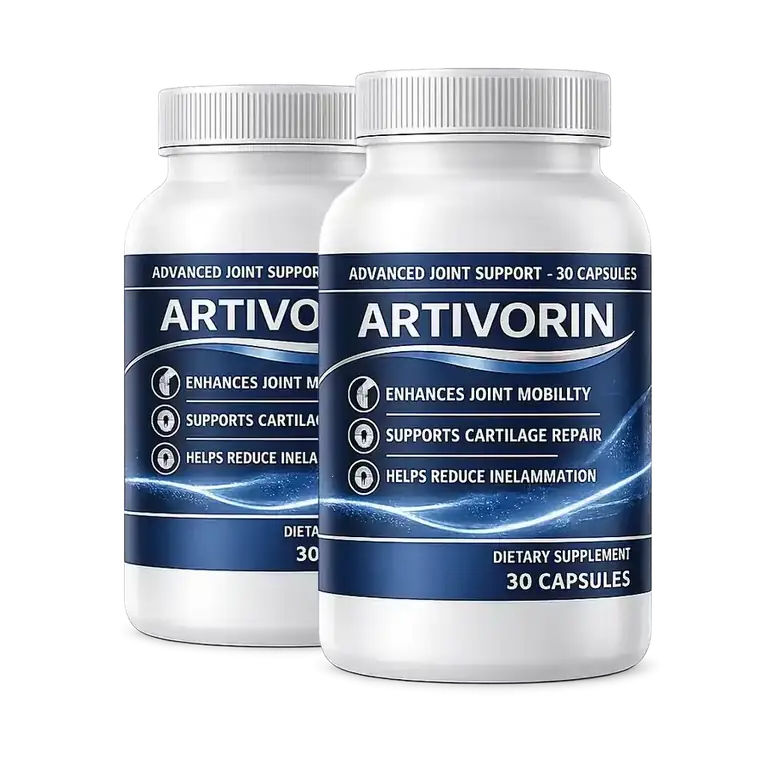
Read the guide, then look at Artivorin with the amounts in mind
Turmeric extract at 95 per cent curcuminoids leads this label, and the research amount is 1,500 mg a day. One capsule a day, 60 days from purchase in which to think again.
Two bottles $178 · six bottles $294 · 60-day money-back guarantee
Order Artivorin On The Official WebsiteLot ART-26/MY-2615 · one a day · 30 in every bottle